 THE GLOBAL WINDOW OF TURKISH FOOD AND AGRICULTURE The Global Window of Turkish Food and Agriculture Sector



Related Articles
Press release…
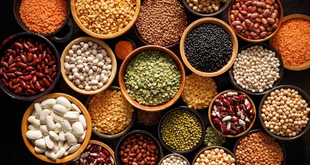
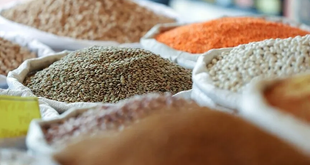
The cereals, pulses, oilseeds and products sector in Southeastern Anatolia maintained its leading position with a 29.6 percent share of the region’s total exports, which approached 10 billion dollars in 10 months.

Between January and October, the Southeastern region’s sectoral exports reached 2.9 billion dollars, an increase of 4.6 percent. Despite a 1.7 percent decline compared to the same period last year, pasta remained the most exported product in the sector with 499.9 million dollars, while sunflower seed oil exports rose by 16.7 percent to 489.5 million dollars, with unit prices per kilogram rising by 22.3 percent.
Sweet biscuits and wafers, which surpassed wheat flour exports to take third place, generated 299.9 million dollars in revenue during this period. The Iraqi market retained its top position in the region’s cereal exports with 799.5 million dollars, but declined by 14.7 percent. In contrast, exports to Syria soared by 46.7 percent to reach 331.6 million dollars, partially offsetting the loss in Iraq. The United States, where exports rose by 34.8 percent to 248.2 million dollars, entered the region’s top three markets. Sales to African countries soared by 17.4 percent compared to the same period last year.
‘The restrictions imposed by Iraq are disrupting the natural flow of trade.’

In the January-October period, Iraq ranked first with 36.2 percent of Türkiye’s 22.9 billion dollars exports to neighbouring countries. Given developments in the Iraqi market, the decline in total exports to this country is expected to approach 5 percent this year. Celal Kadooğlu, Chair of the Southeastern Anatolia Cereals, Pulses, Oilseeds and Products Exporters’ Association, stated that the decline in their trade with Iraq affects all exports, but it is not only of numerical importance for food businesses in the region, it is also of strategic importance.
“This is because the restrictions imposed by Iraq on wheat flour imports, under the pretext of protecting its own industry, disrupt the natural flow of trade. The grain and flour industry in our region, which has grown over many years with investments made to meet Iraq’s basic needs, has been forced to leave a significant portion of its production capacity idle due to non-tariff barriers, quotas and regional privilege regulations introduced in recent times,” he said.
Pointing out that production activities at some facilities located in important centres such as Mardin, Gaziantep and Diyarbakır have been seriously disrupted, he added, “Cereal sector exports to Iraq fell by 17.6 percent to 1.4 billion dollars in the first ten months across the country and by 14.7 percent to 797.9 million in the Southeast.”