 THE GLOBAL WINDOW OF TURKISH FOOD AND AGRICULTURE The Global Window of Turkish Food and Agriculture Sector


Related Articles
October, 2026…
Ensuring food safety is achieved through legislation grounded in scientific principles, the implementation of good manufacturing and hygiene practices, effective official controls, a robust laboratory infrastructure and the provision of transparent, accurate and accessible information to consumers. In an era characterized by evolving production methods, diversified food trade and rapid access to information, it is as important to communicate scientific assessments of food-related risks to the public in a clear and understandable manner as it is to conduct the assessments themselves. This holistic approach, which strengthens consumer trust, forms the foundation of the work carried out by our General Directorate of Food and Control.
The risk assessment activities conducted within our General Directorate contribute to ensuring that decision-making processes regarding food and feed safety are based on scientific evidence. Key areas of focus include pesticide and veterinary drug residues, food additives, microbiological hazards, contaminants and exposure to multiple chemical substances. In this process, the nature of the hazards, their levels in food products and the extent of human exposure through consumption are analyzed collectively to evaluate potential impacts on human health.
We carry out our risk assessment activities with the contribution of scientific commissions composed of experts from universities and research institutions. These commissions examine national data, international research and the latest scientific evaluations to formulate scientific opinions. Such opinions serve as a guide for legislative efforts, the planning of official control programmes and the determination of measures aimed at protecting consumer health. Scientific assessment requires reliable and high-quality data to be built on a solid foundation. Our laboratories play a crucial role in generating such data. Analyses conducted on samples collected during official controls determine whether products comply with relevant regulations. When combined with monitoring studies and consumption data, the information derived from these analyses also supports risk assessment processes. In this way, field inspections, laboratory work and scientific assessments complement one another.
We continue our efforts to further strengthen the infrastructure of our food control laboratories which are equipped with modern instrumentation and staffed by subject-matter experts and to expand our analytical capacity. We ensure the accuracy and consistency of our analytical results through method validation and verification, proficiency testing, accreditation and quality assurance practices. This capacity is vital not only for monitoring existing risks but also for investigating newly emerging hazards.
Transforming data generated in laboratories into scientific assessments requires keeping pace with current methodologies and engaging in the international exchange of information. Our collaboration with the European Food Safety Authority (EFSA) makes a significant contribution in this regard. Under the “Project on Preparing Candidate and Potential Candidate Countries for EFSA”, an initiative maintained between our Ministry and EFSA since 2006, knowledge and experience are shared in the areas of risk assessment, data collection and risk communication. Through scientific networks, training programmes and technical meetings, we stay updated on current assessment methods and enhance the professional expertise of our staff. Our cooperation with EFSA at a scientific and technical level also encompasses joint initiatives aimed at enhancing consumer awareness. In this context, by participating in the “Safe2Eat” campaign which our country joined for the first time in 2025, again in 2026, we support consumers in accessing accurate information regarding food safety and making informed choices. For our 2026 activities in Türkiye, we are focusing on reducing food waste, preventing foodborne illnesses and ensuring that food is prepared using safe methods. Through content shared via our General Directorate’s social media accounts and the “Reliable Food” (Güvenilir Gıda) website, we provide consumers with science-based explanations and practical recommendations that can be applied in daily life.
We also value the contributions of the food industry and industry organizations in ensuring that scientific information reaches a broader audience. The diligence that businesses demonstrate in their production processes, internal control systems and traceability practices when extended to the information they provide to consumers, fosters an environment of mutual trust. In this regard, we consider the collaborations to be developed with the Federation of Food and Drink Industry Associations of Türkiye (TGDF) and its member organizations to be highly valuable for the dissemination of science-based information.
As the General Directorate of Food and Control, we continue to enhance our risk assessment capacity, laboratory infrastructure and international collaborations. We consider it an integral part of our work to incorporate scientific data into decision-making processes and to share the rationale behind these decisions with the public in an accessible format. Strengthening the ties among the public sector, the scientific community, the industry and consumers will contribute to safeguarding food safety and ensuring lasting consumer trust…
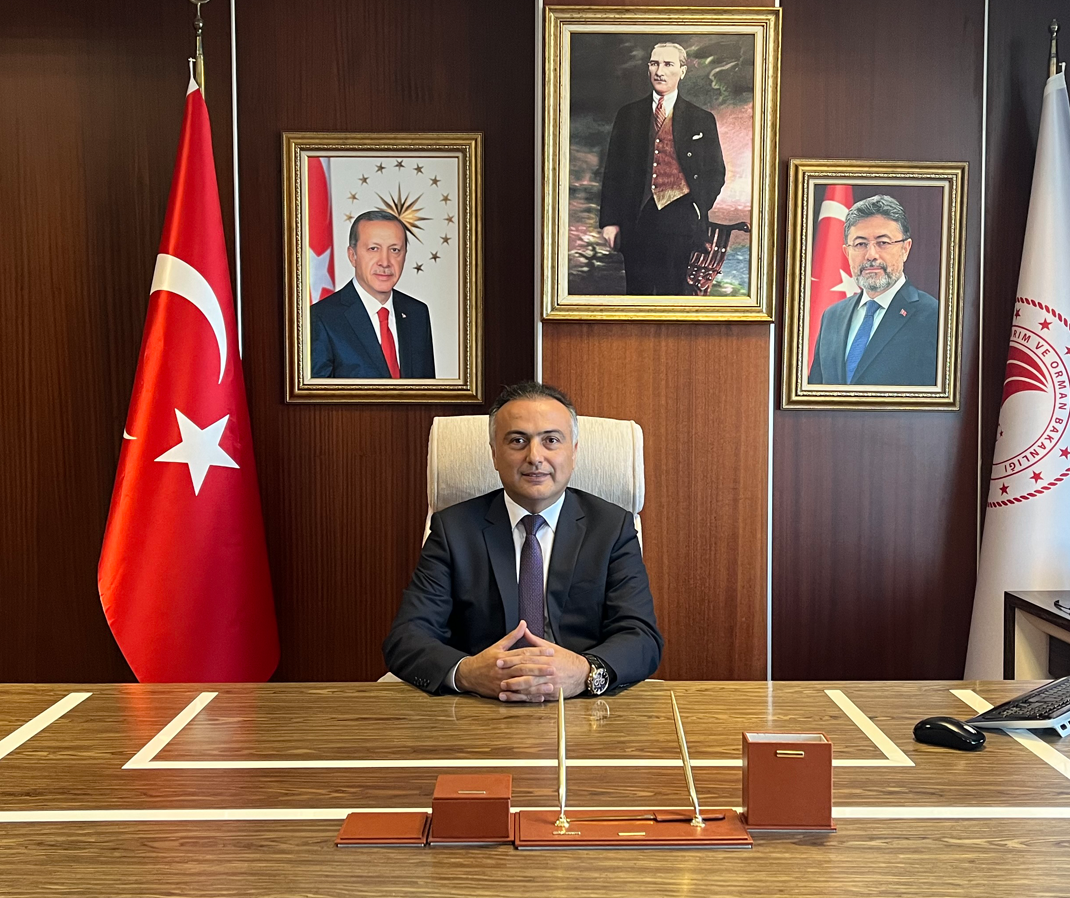
Dr. Ersin Dilber,
Director General of Food and Control,
The Ministry of Agriculture and Forestry
Source: www.tgdf.org.tr