 THE GLOBAL WINDOW OF TURKISH FOOD AND AGRICULTURE The Global Window of Turkish Food and Agriculture Sector


Related Articles


November, 2026…
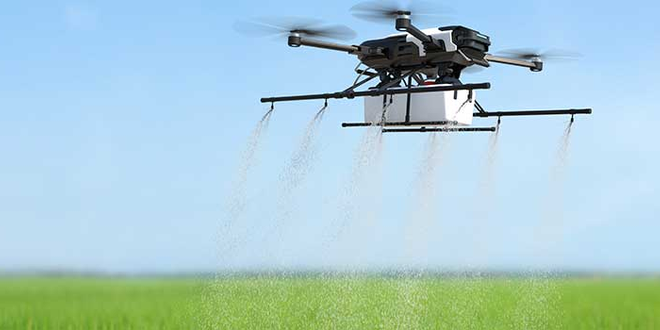
China operates the world’s largest fleet of agricultural drones, with more than 300,000 covering more than 460 million mu (30.67 million hectares) of farmland every year, CCTV News reported on October 28, 2026. Once used mainly for crop spraying, the aircraft are now deployed to monitor crop conditions and transport agricultural supplies and harvested products.
Compared with manual labour, plant-protection drones can improve operational efficiency by more than 20 times, while reducing water use by more than 50 percent and cutting pesticide consumption by 20 percent to 40 percent, industry data showed. Agricultural drones have become the main type of technical equipment used in crop protection work across China.
With drones and robots leading the way, smart agricultural machines are expanding into ever more diverse applications, boosting agricultural yields across the country.
Industry experts said that low-altitude equipment is shifting from an “experimental novelty” to a standard feature of specialized agricultural services, becoming an important force for reducing costs, improving efficiency and promoting the upgrading of China’s agriculture sector.
According to CCTV News, the applications for drones in agriculture are also expanding rapidly. Tasks once done by hand such as watering water bamboo, transporting oranges down mountains and carrying out field inspections are increasingly handled by low-altitude equipment, fundamentally reducing labour costs in farming.
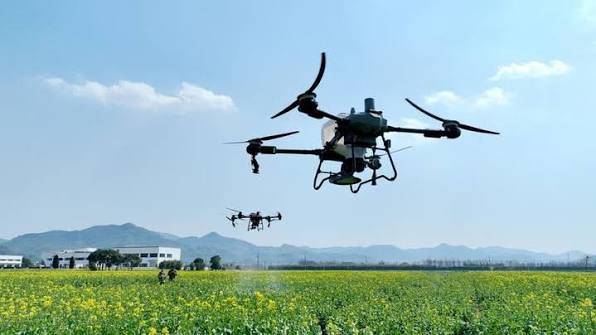
In Guan’ao Village in Huangyan district of Taizhou, East China’s Zhejiang Province, a local cooperative has adopted drones for routine farm work. Using drones, the cooperative can complete spraying and fertilizing across 500 mu of water bamboo fields in a single day. Each spraying session saves about 5,000 yuan (749.96 dollars) to 6,000 yuan, while annual labour savings amount to 30,000 to 40,000 yuan.
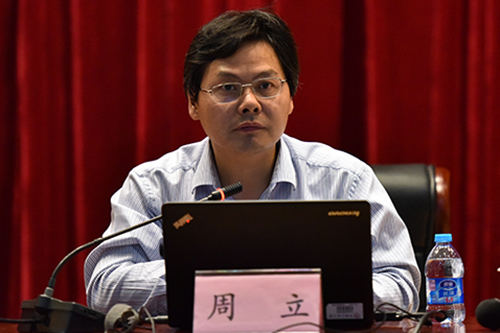
Zhou Li, a professor at the School of Agricultural Economics and Rural Development at Renmin University of China, told the Global Times that the rapid spread of agricultural drones in China is being driven by several factors.
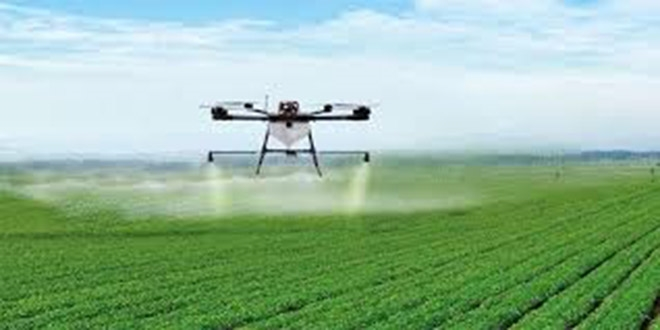
First, urbanization has changed the rural labour structure, raising farm wages and intensifying the demand for machines that can replace manual labour. Second, policy support for the low-altitude economy has accelerated the sector’s development, with agriculture becoming one of its most mature commercial applications. Third, domestic manufacturers have continued to improve drone technology while reducing costs, making the devices more accessible to small farmers and cooperatives, Zhou noted.
According to Zhou, drones are useful beyond crop protection. As orchards, tea plantations and protected cultivation expand, drones are showing clear advantages in hilly and mountainous areas and in scattered plots that are difficult for large machinery to reach. Their increasing use in transport, pollination, seed spreading and field monitoring suggests the market still has significant potential.
In addition, experts said that the increasing intelligence of drones is fostering agricultural social services and creating new job opportunities.
Agricultural drones are only one example of China’s broader push toward smart farming. In recent years, the country has accelerated the digital and intelligent transformation of agriculture, with a wide range of smart devices playing an increasingly important role in production.
According to domestic media reports, technologies such as smart harvesting robots, intelligent irrigation systems and artificial intelligence-powered laser weeding robots are beginning to be deployed in agricultural operations, further enhancing efficiency and precision across the industry.
China made significant progress in agricultural mechanization during the 14th Five-Year Plan (2021-25) period. According to an official of the Ministry of Agriculture and Rural Affairs, the contribution rate of agricultural science and technology progress exceeded 64 percent, the coverage rate of improved crop varieties surpassed 96 percent and the comprehensive mechanization rate for crop planting, management and harvesting reached 76.7 percent, with major grain crops now largely fully mechanized…
Source: news.agropages.com