 THE GLOBAL WINDOW OF TURKISH FOOD AND AGRICULTURE The Global Window of Turkish Food and Agriculture Sector


Related Articles



October, 2026…
Türkiye’s seed cotton production is expected to fall 38 percent as rising input costs and the war in the Middle East weigh on the sector, prompting farmers to switch to crops such as wheat and maize.
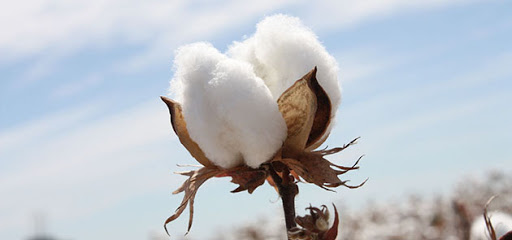
The new cotton harvest season has begun, but increasing production costs are putting the future of cotton fields at risk. Global cotton production is forecast to decline 2 percent in the 2026-2027 season, while Türkiye’s seed cotton output is projected to drop to 1.2 million tonnes.
ÇUKOBİRLİK announced a purchase price of 41.50 Turkish Liras per kilogram for first-grade white cotton with a ginning yield of 42 percent, while the price for spotted cotton was set at 40.5 liras per kilogram.
The Turkish Statistical Institute’s (TÜİK) second crop production estimate also predicts that seed cotton production will fall to 1.2 million tonnes, one of the lowest levels recorded in the past 35 years.
As cotton prices have failed to keep pace with rising costs, cultivation areas have contracted and farmers have increasingly turned to alternative crops such as wheat, maize and sunflower. Fertilizer, diesel, energy, seed and labour expenses, along with the impact of the war in the Middle East on input costs, are expected to shape the market during the new season.

Aegean region’s province of Aydın accounts for 11.6 percent of Türkiye’s cotton production, followed by İzmir province with 6.7 percent and Manisa province with 3.4 percent.
Bülent Uçak, chair of the İzmir Commodity Exchange Assembly, said the area planted with cotton in the Aegean region had contracted 47 percent to 49,454 decares.
The region’s lint cotton production, which stood at 188,000 tonnes in the 2024-2025 season, is expected to decline to 93,700 tonnes in 2026-2027.
Seed cotton refers to the raw crop collected from fields, while lint cotton is the processed fibre ready for use.
In Southeastern Türkiye’s province of Şanlıurfa, which accounts for 41.7 percent of the country’s cotton output, the cultivation area has fallen from 1.7 million decares to 800,000 decares.
Ahmet Eyyüpoğlu, a board member of the Union of Turkish Agricultural Chambers (TZOB) and head of the Haliliye Chamber of Agriculture, said cotton prices had remained at the same level for three years.

“As input costs increased, farmers began to stop planting. Producers moving away from cotton have turned to wheat and maize,” Eyyüpoğlu noted.
He underlined the cost of producing one kilogram of cotton had risen from 30 liras last year to approximately 40 liras this year, adding that the purchase price should be at least 50 liras per kilogram.
Number of cotton-growing villages falls sharply!
Cotton cultivation areas in the Salihli district of Manisa have also declined by between 45 percent and 50 percent compared with last year.
Cem Yalvaç, head of the Salihli Chamber of Agriculture, said the cultivated area had fallen from 65,000-70,000 decares in 2012 to between 3,000 and 4,000 decares.

“The number of villages engaged in cotton farming has dropped from 12 or 13 to two. Producers have shifted to crops with lower costs, including maize, tobacco, peppers and watermelons,” Yalvaç added.
A report on agricultural product markets issued by Türkiye’s Agriculture and Forestry Ministry identified several factors expected to shape the global cotton market next season. These include the impact of geopolitical developments in the Middle East on input costs, the possible effect of drought on U.S. production, the influence of oil prices on cotton’s competitiveness against polyester and China’s production policies aimed at supporting higher yields.
By Şevval Aydoğan,
www.hurriyetdailynews.com