 THE GLOBAL WINDOW OF TURKISH FOOD AND AGRICULTURE The Global Window of Turkish Food and Agriculture Sector


Related Articles

| Press release… |
| Performance Evaluation Trial confirms productivity gains and carcass quality in the Santa Gertrudis breed… |
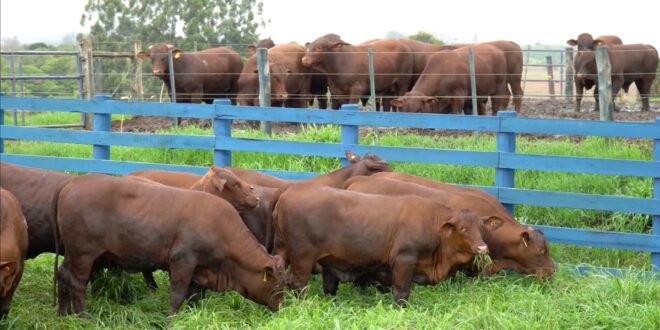
| The quality of beef reaching retail shelves and an efficient, sustainable production chain, begins long before the packing plant. It starts with genetics, herd management, and on-farm production efficiency. Results from the 2nd Performance Evaluation Trial (PAD) of the Santa Gertrudis breed, conducted at the Central Bela Vista Technology Center in Botucatu, São Paulo, (Brazil) demonstrate that this work is delivering measurable progress. The trial included 59 animals—35 males and 24 females—managed under identical conditions over a 77-day period, including 21 days of adaptation and 56 days of official evaluation. The diet was formulated to target an average daily gain (ADG) of 1.0 kg; however, performance exceeded expectations. During the official test phase, males recorded an average ADG of 1.57 kg/day, while females reached 1.44 kg/day. Top-performing animals surpassed 2.18 kg/day, achieving final weights above 530 kg at an average age of 15 months. Beyond weight gain, the trial also assessed feed efficiency, how effectively animals convert feed into body mass, and carcass traits directly linked to end-product quality, including muscling, marbling, and fat cover. Males averaged a ribeye area of 83.17 cm², a key indicator of muscle deposition. Females demonstrated strong marbling levels, averaging 3.28%, along with adequate finishing. “The results show consistent progress in performance, feed efficiency, and carcass quality. Males significantly exceeded dietary targets, and we observed important improvements in muscle deposition. The top animals have already been selected for further evaluation as young sires, and semen has been collected at Central Bela Vista for distribution to breeders,” said Matheus Henrique Vargas de Oliveira, Production and Research Supervisor at Central Bela Vista. In practical terms, more efficient cattle produce more beef with better feed utilization, reducing waste and improving system sustainability and profitability. For consumers, this translates into greater product uniformity, quality, and predictability in the marketplace. “When comparing 2025 to 2024, we observed nearly a 10% increase in ADG among the top-ranking animals, along with a higher concentration of cattle in the superior performance classes. Genetic progress is occurring across the breed as a whole,” noted Anderson Fernandes, President of the Technical Council of the Brazilian Santa Gertrudis Association. Individual highlights included animal 1729 DA JATOBÁ, overall performance index leader among males, and female 4/127 DA BILÍ, which topped the female ranking with an index of 129.5 in the Elite classification (1st place). According to Antônio Roberto, President of the Brazilian Santa Gertrudis Association, the results confirm the program’s maturity and the breed’s alignment with modern beef industry demands. “Santa Gertrudis cattle are delivering more productive, efficient animals with carcass quality aligned with market requirements.” |