 THE GLOBAL WINDOW OF TURKISH FOOD AND AGRICULTURE The Global Window of Turkish Food and Agriculture Sector


Related Articles

1 July, 2026…
Erhan Özmen, Chairman of the Board at Özmen Flour (Özmen Un) and a leading figure in the flour industry, outlined the new framework for competition in the milling sector during his speech at the IDMA Global Grain & Milling Forum. Özmen stated that, under intense competition and pressure from low profit margins, companies must invest not only in capacity but also in technology, data management, skilled human resources, know-how, the ability to develop brand-specific products and a ‘zero-defect’ approach in order to differentiate themselves.
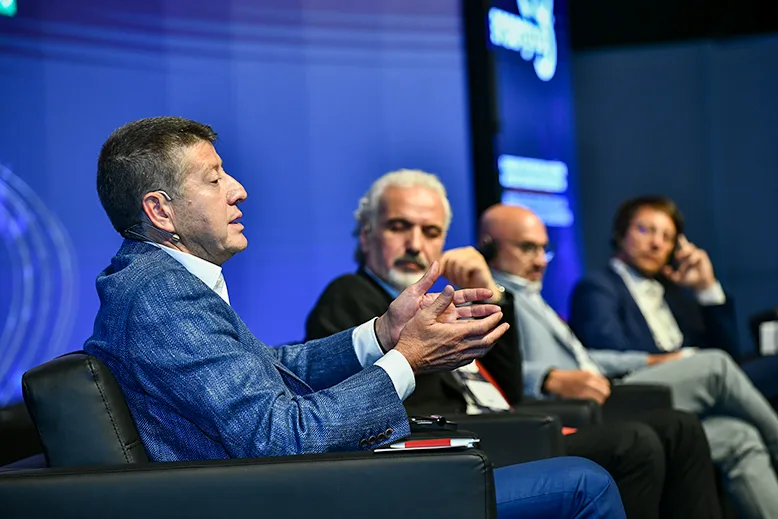
Erhan Özmen, Chairman of the Board of Directors at Özmen Flour, assessed the transformation taking place in the sector and the impact of technology on competitive strength during the session titled ‘Industry 4.0 in Milling: Smart, Sustainable and Scalable’ at the IDMA Global Grain & Milling Forum held in Istanbul.
Beginning his speech by thanking the IDMA family, Özmen noted that the sector is undergoing a very rapid process of change. Stating that this transformation affects not only companies but also individuals, families, countries and the whole world, Özmen emphasised that every organisation must question to what extent it has learnt from these developments and how much it has renewed itself.
Özmen recalled that, in the milling industry, institutional memory had historically relied heavily on the foreman. Pointing out that in the days before laboratories, digital systems and modern technologies, the foreman would assess the wheat by hand, by eye and through experience, Özmen remarked, “When the foreman left the business, the institutional memory went with him.” Özmen stated that the milling industry has undergone a major transformation over the last 30–40 years, adding that this change has forced the sector to evolve.
THE WORLD OF BAKED GOODS IS CHANGING RAPIDLY…
According to Özmen, one of the key factors driving the transformation of the milling sector is the rapid change within the baked goods industry. Underlining that there is a very broad consumer culture worldwide, ranging from bread to desserts, from börek to croissants and from pizza to industrial baked goods, Özmen said, “Every street, every neighbourhood, every city and every country has its own unique baked goods culture.”
Indicating that this broad consumption pattern is constantly increasing and altering demand, Özmen explained, “The milling sector must respond to this change at the same pace. Furthermore, developments supported by Industry 4.0, digitalisation and artificial intelligence have now become a necessity rather than an option for the sector.”
Reminding that the milling sector in Türkiye and worldwide is facing intense competition, with many firms operating at very low profit margins, Özmen added, “However, I view this challenging environment not merely as a risk, but also as an opportunity for differentiation. Competition may be intense and profit margins may be low. but I see these as significant opportunities for differentiation, while companies that use technology correctly can gain a competitive edge.”