 THE GLOBAL WINDOW OF TURKISH FOOD AND AGRICULTURE The Global Window of Turkish Food and Agriculture Sector


Related Articles

Press release…
Events in Rome highlight vital linkages between forests and water…
March 19, 2026…
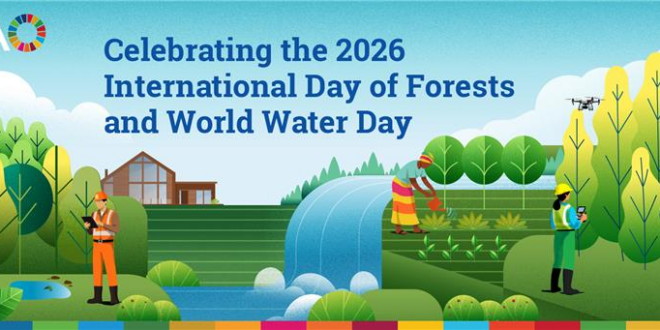
Rome – The Food and Agriculture Organization of the United Nations (FAO) marked International Day of Forests 2026 and World Water Day 2026 on Thursday with a series of high‑level and technical events at its headquarters in Rome.

The two UN global observances, celebrated annually on 21 and 22 March respectively, underscore the critical role of forests and water in sustaining local economies, resilient agrifood systems and the Sustainable Development Goals.
In a video message opening the celebrations, FAO Director‑General QU Dongyu emphasized the intrinsic connection between forests, water and agriculture.
“Forests need water, water needs forests, and we depend on both,” the Director‑General said. “FAO is celebrating these international days together to highlight the powerful linkages between the two natural resources that underpin our agrifood systems.”
Sustainably managed forests at the heart of economies…
The theme of the 2026 International Day of Forests – Forests and Economies – draws attention to the essential contributions forests make to economic prosperity and livelihoods worldwide. Forests and trees contribute trillions of dollars to the global economy annually and support billions of people who rely on forest products for income, food, energy and well‑being.

Forests sustain family and community agriculture, enhance agricultural productivity and safeguard watersheds. As natural infrastructure, they filter and infiltrate water, reduce erosion, improve water quality and mitigate floods — services that are indispensable to rural livelihoods and national economies.
More than half of global GDP – an estimated 44 trillion dollars – depends on nature, including forests. Demand for forest products is at an all-time high, with about 4 billion cubic metres of wood produced per year. Based on current trends, this volume is projected to rise by as much as 1 billion cubic metres of industrial roundwood by 2050 as the population grows and the world seeks to replace carbon-intensive products with renewables – adding to the imperative of ensuring sustainable forest management.

In addition, non‑wood forest products such as foods, medicines, resins and ornamental plants are used by up to 5.8 billion people and are valued at over 9.4 billion dollars annually, with significant potential for expansion.
The many essential products obtained from forests underscores the importance of securing a sustainable supply based on the efficient use of forest resources and meeting goals to halt deforestation, restore degraded landscapes and protect biodiversity.
Investing in forest conservation, restoration and sustainable use delivers substantial returns. Forest loss, by contrast, leads to soil erosion, flooding, climate impacts and long‑term productivity decline.
FAO continues to support countries in scaling up forest‑based solutions. For example, the Forest and Farm Facility assists producer organizations in 15 countries to build value‑added enterprises while restoring landscapes and reducing poverty. The Great Green Wall Initiative has meanwhile generated more than 335 000 jobs for communities across the Sahel, diversifying incomes and strengthening resilience…