 THE GLOBAL WINDOW OF TURKISH FOOD AND AGRICULTURE The Global Window of Turkish Food and Agriculture Sector


Related Articles

September, 2026…
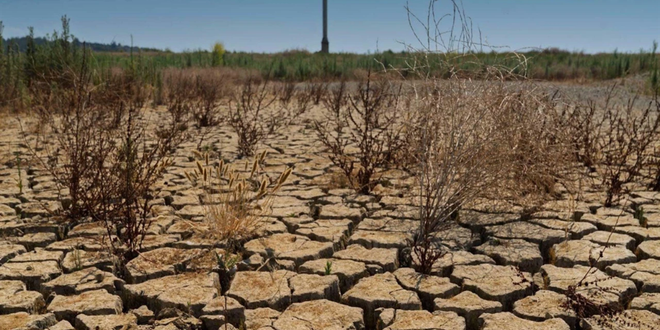
A report titled “Water Policies for a Drier World”—prepared by the Water Policies Association (SPD) as part of its research report series—emphasizes that drought has ceased to be an isolated natural phenomenon and has instead become a structural “new normal” on a global scale; it further underscores that water policy forms the backbone of both national security and climate resilience.
Prepared by Dursun Yıldız and Dr. Hasan Hüseyin Doğan, the report—which examines hydrological, climatic and ecological disruptions experienced globally over the last century using comprehensive data—reveals that simultaneous degradations are occurring across the atmospheric, surface, and groundwater components of the water cycle.
According to the Water Policies Association’s research, the total land area worldwide exposed to drought doubled between 1900 and 2020, while soil moisture levels dropped to critical lows across 37 percent of the Earth’s surface. It was determined that groundwater levels declined in 62 percent of monitored aquifers and that more than 10 percent of rivers worldwide were flowing at critically low discharge rates.
Drought risk could double under a high-emission scenario…
The report highlights that the sharp rise in drought trends cannot be explained solely by natural climate cycles; instead, it notes that excessive water extraction, improper land use, deforestation and the creation of impermeable surfaces due to urbanization have structurally deepened the crisis.
The analysis, based on scientific modeling, draws attention to the following projections:
Under high-emission scenarios, the frequency of drought periods could more than double by the year 2100. The frequency of extreme heatwaves could surge up to forty-fold.
The population and agricultural areas exposed to drought will expand dramatically.
The 18 percent shrinkage of wetlands in OECD countries documents the loss of the water cycle’s natural buffer mechanisms.
Agriculture and metropolitan areas in Türkiye face a direct threat.
The report indicated that the hydrological situation has created a multi-dimensional chain of vulnerability. An assessment specific to Türkiye noted that crop production in the Central Anatolia, Thrace and Southeastern Anatolia regions is at high risk due to drought, declining groundwater levels, and the loss of soil moisture.
It was reported that the gap between water demand and natural replenishment capacity in metropolitan areas is widening rapidly and that disruptions to river transport, a decline in hydroelectric power generation and industrial cooling water requirements are directly undermining public infrastructure as well as energy and food security…