 THE GLOBAL WINDOW OF TURKISH FOOD AND AGRICULTURE The Global Window of Turkish Food and Agriculture Sector



Related Articles

Early harvest oils were born out of necessity, but the legend has spread so far that it’s even outgrown its reach. It has been surprised by itself 🙂
Particularly in Türkiye, they’ve almost never called it “olive oil” if it is not early harvest, non-cold-pressed oil!
“Early” harvest. As the name suggests, earlier than it should be…
Like premature birth. It hasn’t yet received its due from the soil and sun and its flavour hasn’t yet matured…
But despite this, it’s still very popular.
You’re probably wondering how the legend started and how it got here, aren’t you?
The article is a bit long, but anyone who takes the time to read it won’t regret it.
There were two schools of thought in olive oil…

One was Italian, the other Spanish!
While the Italians reaped the rewards of added value thanks to the authenticity and exquisiteness of olive oil, the Spanish competed for market with their low-price, high-priced offerings.
In this context, those who suppose early harvest for “highest quality”, might think the Italians invented it, but no, in fact, the Spanish, while trying to reduce costs, found it right in front of them and introduced it as a new category!
How? Let me explain…
In Spain, there are institutions similar to our Olive Research Institute to develop olive cultivation.
I took a week-long course on table olives at one of these institutes, so I grasped the logic a bit.
To enhance profitability, one must either raise the price or lower the cost.
To capture a share of the olive oil market, dominated by Italians settled in the United States, the latter option seemed much more rational to the Spanish and therefore they sought ways to produce cheaper products.
For example, they formed cooperatives to farm together.
And these institutes…
These institutes work in coordination with companies and farmers. Their goal is to design lower-cost, standardized olive products.
Of course, there are niche table olives and oils in Spain, but the vast majority of the work is conventional.
These people have thought through every detail and developed incredible projects to reduce costs by changing where and what!
First, they figured out how to remove the bitterness from olives with caustic.
Then, they figured out how to dye the olives…
In Spain, conventional table olives, whether sold black or green, are picked when they are still dark green.
So, early harvest…
You’re starting to get the point.
Early harvesting is often thought to be a burden, but on the contrary, it offers numerous benefits.
Because we take the weight off the tree early, it enters the dormancy phase more quickly and produces a bountiful crop again the following year.
It’s not eaten by worms or birds.
It doesn’t fall to the ground.
Harvesting is easier because the rains and cold haven’t yet begun and the weather doesn’t darken early.
They also observed that:
The olive tree, by its nature (except for the Uslu olive variety), doesn’t ripen its fruits all at once.
That’s why natural black olives are harvested by hand.
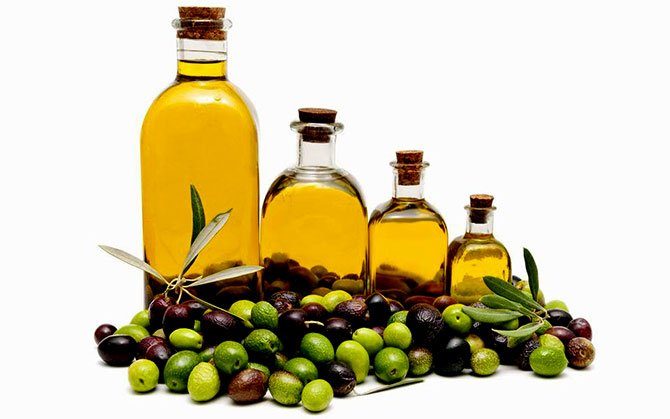
Of course, this significantly increases the cost.
Furthermore, the fruits of olive trees with large fruits are almost uniform in size, especially in the early stages before they begin to grow.
This is essential for standard production.
For these reasons, the farmers adopted early harvesting.
Because they had created the global market for table olives, their work was easier.
But a problem arises with the oil.
The oil’s taste was unusually bitter (astringent) and pungent.
They considered marketing it as a gourmet delicacy, showcasing the benefits of polyphenols…
Over time, this statement gained acceptance far beyond their expectations.
It got to the point where, in particular, oil producers here in Türkiye started a pissing contest (sorry for this expression by the way) over the polyphenol content.
My oil has this polyphenol content, yours has that, mine is the best, and so on!..
We also produce Ayhan Sicimoğlu’s (a well-known musician and TV programmer-presenter) oils.
One day, he came over and said, “Ours must have the highest polyphenol content on the market.”
“Ayhan, tall height has a positive effect on attractiveness, doesn’t it?” I said. He agreed…
I continued, “Now, you’re a charismatic man with a tallness, but Sultan, you know the tallest man in Türkiye, would you be even more handsome if you were even taller?”
“Well, that would be bad.”
“Come on then, excessively high polyphenols in oil would be bad, too. Everything needs a balance,” I said, and he was convinced.
He was convinced, but our olive oil elite needed to hear the German taster’s concept of harmony for them to be convinced.
Returning to our country…
We are neither Italy nor Spain!
We must elevate our own reality, not diminish it.
To give an example from Akhisar (a district of Aegean province of Manisa), our farmers make a living from producing both green and natural black table olives.
We harvest olives not for oil, but for table use. In addition, we make oil from the smaller ones.
In other words, we produce oil from early harvested green table olives and from young, natural black olives, from ripe harvested olives.
We obtain oil from one with high polyphenols and the other with high squalene and vitamin E.
In my opinion, neither is superior to the other one…
I believe consumers should choose according to their tastes and needs and we should proudly offer these diverse options.
I hope I’m not misunderstood!
My goal is not to minimize early harvests, but to ensure the ripe harvest isn’t squandered and given it its due…

By Mustafa Alhat,
President of the Olive Producers and Industrialists Association (ZEYDER)