 THE GLOBAL WINDOW OF TURKISH FOOD AND AGRICULTURE The Global Window of Turkish Food and Agriculture Sector


Related Articles
Press release…
October, 2026…
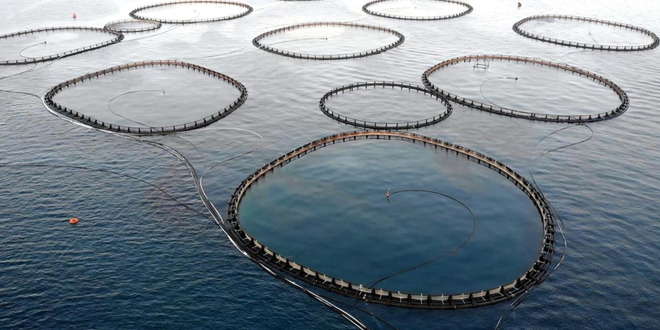
In 2025, Türkiye’s fisheries and aquaculture production exceeded one million tonnes for the first time. Aquaculture accounts for 60.4 percent of the total, while sector exports surpassed 2.2 billion dollars. With farming facilities moving further offshore and export markets becoming increasingly demanding, multiparametre sensors, computer vision, automated feeding and data management platforms are being adopted to support this growth. Precision aquaculture technologies will be among the key topics at AquaFarm 2027, scheduled for 17–18 February in Pordenone, with the support of the Italian Trade Agency (ICE).
Pordenone – In 2025, Türkiye’s fisheries and aquaculture production increased by 11.1 percent, reaching a record 1,037,019 tonnes. Aquaculture accounted for 60.4 percent of total production¹. In the same year, exports of fish and seafood products grew by 10.9 percent compared with 2024, exceeding 2.2 billion dollars and reaching markets in 133 countries². The Ministry of Agriculture and Forestry is targeting 3 billion dollars in exports by 2028³.
Achieving this target will require greater efficiency, tighter cost control and an increased ability to document production processes for buyers and destination markets.
At the same time, operating conditions are becoming more challenging. Since the late 1980s, Türkiye’s marine spatial planning policies have progressively moved marine aquaculture facilities further offshore to reduce conflicts with tourism and environmental protection activities⁴. Cages located further from the coast are more exposed to currents, waves and changing weather and sea conditions, while also being more difficult to monitor through direct inspection.
This is why smart aquaculture tools are becoming increasingly widespread across the sector. Sensors, computer vision, automation and software are turning fish farming into a continuously measurable production system.
Sensors: Monitoring Water in Real Time
The first level of digitalisation concerns water quality. Dissolved oxygen and temperature are the most critical parameters: in a high-density fish cage, a drop in oxygen levels can cause stress, reduced appetite or mortality within hours.
Other parameters include pH, salinity, turbidity and chlorophyll, measured through fixed probes or multiparameter buoys. Data are transmitted to shore via radio, mobile networks or satellite. When predefined thresholds are exceeded, systems generate alerts and, in land-based facilities, can directly activate oxygenation equipment.
These solutions are already being used in Türkiye, both in marine and inland aquaculture. In April 2025, continuous oxygen and temperature monitoring systems were installed at three offshore sea bass and sea bream farms in İzmir. Among the stated objectives were improved emergency planning and optimisation of feed conversion ratios⁵.
Similar systems are also actively used at trout farms in Anatolian reservoirs, including Keban, Çekerek and Karacaören, as well as at facilities along the Black Sea and Aegean coasts⁶.
Computer Vision: Counting, Weighing and Observing Fish Without Handling Them
The second level involves computer vision. Underwater cameras, often stereoscopic and connected to artificial intelligence algorithms, make it possible to estimate average fish weight and size distribution without catching or handling the animals. They also allow farmers to monitor growth over time and detect abnormalities in swimming and feeding behaviour that may indicate stress or disease.
For fish farmers, biomass estimation is strategically important. Feed rations, harvest planning, treatments and commercial operations all depend on it. Estimates based on manual sampling are time-consuming, stressful for the animals and subject to error. Optical monitoring, by contrast, makes the data continuously available and updatable.
The same technologies, mounted on remotely operated vehicles (ROVs) and underwater drones, are also used to inspect nets and mooring systems. This is particularly important in offshore cages, where damage to a net can lead to fish escapes and financial losses.
Precision Feeding: Managing the Largest Cost Item
According to the Food and Agriculture Organization of the United Nations (FAO), feed can account for 40–60% of total production costs in semi-intensive and intensive aquaculture systems. Moreover, only 15–25% of the nitrogen contained in feed is retained by farmed organisms, while the remainder is released into the environment⁷.
Every improvement in feeding efficiency therefore contributes both to higher profit margins and to a reduction in environmental impacts.
Under conventional management, feed rations are calculated using standard tables based on fish size and water temperature, with adjustments made according to the operator’s experience.
Precision feeding systems, on the other hand, connect automated feeders, from feeding barges to land-based feeding units, with sensors and cameras. Feed quantities are adjusted according to current water temperature and oxygen levels. When cameras detect that feed pellets are no longer being consumed, distribution is stopped.
Alongside this technological infrastructure, research is advancing on functional feeds, the microbiome and animal physiology, with the aim of improving feed utilisation, animal health and resilience to stress.
Remote Sensing and Forecasting: Monitoring Farms from Space
Monitoring does not stop at the fish cage. Satellite data on sea surface temperature, chlorophyll and turbidity can help anticipate algal blooms, marine heatwaves and changes in environmental conditions in the areas where farms operate.
High-resolution marine and weather forecasts support safer planning of feeding, harvesting and fish transport operations, while also helping operators protect facilities before severe wave conditions develop.
Real-time environmental monitoring systems are also increasingly being used to detect the presence of invasive species, an issue of growing importance in the Eastern Mediterranean.
The most significant advances come from integrating all these sources of information into a single aquaculture management platform. Such platforms bring together data on environmental parameters, feeding, growth, mortality, treatments and harvesting, making them accessible in real time, including through mobile devices.
For a supply chain exporting to more than 130 countries, traceability is a commercial requirement. Systematically collected data throughout the production cycle make it easier to meet the requirements of major retail chains, certification bodies and importers.
The role of farm managers nevertheless remains decisive. Technology increases the amount of information available to support decisions, but determining which alerts require action, when to bring forward a harvest or how to adapt a feeding programme still requires professional expertise.
Marine and Inland Aquaculture: Different Needs
Türkiye combines large-scale marine aquaculture, particularly concentrated in the Aegean Sea, with extensive inland trout production. The technologies given priority therefore differ according to the type of operation.
For offshore facilities, the main concerns are structural resilience, remote data transmission, underwater inspections and marine weather forecasting.
In inland waters, controlling oxygen levels during the warmer months is particularly important. In land-based recirculating aquaculture systems (RAS), automation covers oxygenation, filtration and water treatment processes.
There is therefore no single technological package for smart aquaculture. The challenge is to select and integrate solutions suited to the type, location and size of each facility.
At the same time, new challenges are emerging, including offshore connectivity, interoperability between systems from different suppliers, staff training and the economic viability of investments for smaller operators.
Aquaculture Technologies at the Centre of Discussions at AquaFarm 2027…
Technology, data and efficiency will be among the main themes of the tenth edition of AquaFarm, scheduled to take place in Pordenone on 17–18 February 2027.
Topics currently under development include sensor technologies and Big Data, remote sensing and water quality monitoring, observation of fish behaviour and high-resolution weather forecasting.
The programme will also cover systems for the real-time detection of environmental threats and invasive species, alongside precision feeding, functional feeds, the microbiome and animal physiology.
“Türkiye has become a major player in Mediterranean aquaculture, achieving growth rates that very few other sectors worldwide can match. When production reaches this scale, what makes the difference is the ability to control every stage of farming, from water quality and feeding to animal health. Through AquaFarm, we want to offer Turkish industry professionals an opportunity to discover and exchange knowledge about the technologies and expertise that can support the next stage of development in their sector,” says Renato Pujatti, President of Pordenone Fiere.
AquaFarm is organised by Pordenone Fiere in partnership with API – the Italian Fish Farmers Association and AMA – the Mediterranean Aquaculture Association.
The 2027 edition is supported by ICE – the Italian Trade Agency for the Promotion and Internationalisation of Italian Companies.
The conference programme is currently being updated and will be finalised over the coming months.
About AquaFarm…
AquaFarm is an international exhibition and conference event, unique in Italy, dedicated to aquaculture and shellfish farming, algae cultivation through its dedicated AlgaeFarm area, and the small-scale and professional fishing sector through the AquaFishery area.
The event is organised in partnership with the Italian Fish Farmers Association (API) and the Mediterranean Aquaculture Association (AMA).
It brings together an average of 3,000 industry professionals from more than 40 countries, with international visitors accounting for 25 percent of attendance. It also hosts more than 100 international exhibiting companies from EU and non-EU countries, representing 30 percent of all exhibitors, and features a programme of approximately 30 events, including conferences, technical workshops and industry forums.
AquaFarm is held with the support of the organisations listed in the original press release.
Sources…
¹ Republic of Türkiye – Ministry of Agriculture and Forestry, Fisheries and Aquaculture Statistics 2025.
² Republic of Türkiye – Ministry of Trade, 2025 Export Data (30 May 2026).
³ Statement by Turgay Türkyılmaz, Director General of Fisheries and Aquaculture, 2 July 2026.
⁴ European MSP Platform, Türkiye: Aquaculture and Tourism.
⁵ Akuamaks, announcement dated 8 April 2025.
⁶ Akuamaks, facility references.
⁷ FAO, On-farm Feeding and Feed Management in Aquaculture, FAO Fisheries and Aquaculture Technical Paper No. 583, 2013.
Media Contacts…
Simona Maldarelli – smaldarelli@fierapordenone.it
Donatella Cambosu – donatella@tellerspr.com
Federica Ielapi – federica@tellerspr.com