 THE GLOBAL WINDOW OF TURKISH FOOD AND AGRICULTURE The Global Window of Turkish Food and Agriculture Sector


Related Articles

Press release…
October, 2026…
When delegates from around the world gather in Auckland for the IDF World Dairy Summit 2026, they will be meeting in a country whose dairy story is one of the most remarkable agricultural transformations in history.
Long before New Zealand became synonymous with dairy excellence, the islands of Aotearoa were home to a unique ecosystem with no native land mammals other than bats. Māori communities lived in close connection with the land and maintained only two domesticated mammals brought by their Polynesian ancestors: the kurī (Polynesian dog) and the kiore (Polynesian rat).
The arrival of European explorers in the late eighteenth century introduced new species to New Zealand. Captain James Cook’s voyages brought pigs, goats and chickens, laying the foundations for future livestock farming. Cattle, however, would arrive later and change the course of the nation’s history.
In 1814, missionary Samuel Marsden landed a bull and two Shorthorn cows in the Bay of Islands. What began as a modest agricultural experiment would ultimately help shape New Zealand’s economy, landscape and international identity. Those first cattle, imported from Australia, provided milk, meat and draught power to early settlements and established the foundations of a growing dairy sector.
As settlers expanded across the country during the nineteenth century, forests were gradually converted into productive pasture. Small family farms emerged, with milk, butter and cheese becoming essential staples for local communities. By the mid-1800s, dairy farming was becoming an increasingly important part of rural life.
A defining moment came in 1882 with the advent of refrigerated shipping. For the first time, butter and cheese could be transported reliably to distant markets, particularly the United Kingdom. What had been a domestic industry suddenly gained access to the world stage. Refrigeration unlocked unprecedented export opportunities and triggered rapid growth across the sector.
The decades that followed saw the rise of dairy cooperatives, scientific innovation and a uniquely New Zealand approach to milk production. Farmers embraced year-round grazing, improved pasture management, herd testing and breeding programmes. Cooperative ownership models ensured that farmers remained at the centre of the value chain, fostering a culture of collaboration that continues today.
Throughout the twentieth century, New Zealand’s dairy industry evolved from exporting butter and cheese to supplying a diverse range of dairy ingredients and nutritional products to global markets. Research, innovation and farmer-led cooperation helped the sector adapt to changing consumer demands and international trade dynamics.
A major milestone came in 2001 with the formation of Fonterra, a farmer-owned cooperative that brought together much of the country’s dairy processing capacity and strengthened New Zealand’s position in global dairy trade. Today, New Zealand exports dairy products to more than 140 countries and remains one of the world’s leading dairy-exporting nations.
“New Zealand’s dairy journey demonstrates what can be achieved when farmers, science and cooperation work together over generations. From the arrival of three cattle, in the early nineteenth century, to a dairy sector that today helps nourish locals and people in more than 140 countries, this story reflects the power of innovation, resilience and continuous improvement. As the global dairy community gathers in Auckland for the IDF World Dairy Summit 2026, we celebrate not only this remarkable history, but also our shared commitment to shaping the future of sustainable dairy production worldwide,” said Gilles Froment, IDF President.
What makes New Zealand distinctive is not simply its scale but its system. Blessed with a temperate climate and abundant grasslands, New Zealand developed a pasture-based model that combines efficiency, innovation and farmer stewardship. The result is a dairy sector that has become a global benchmark for productivity and export competitiveness.
As the host nation of the IDF World Dairy Summit 2026, New Zealand offers more than a venue. It offers a living example of how innovation, science, cooperation and a connection to the land can transform humble beginnings into global leadership.
From three cattle arriving on a remote shoreline more than two centuries ago to a dairy sector that nourishes millions around the world, New Zealand’s dairy story reflects the enduring power of agriculture to drive healthy people, healthy economies and a healthy planet.
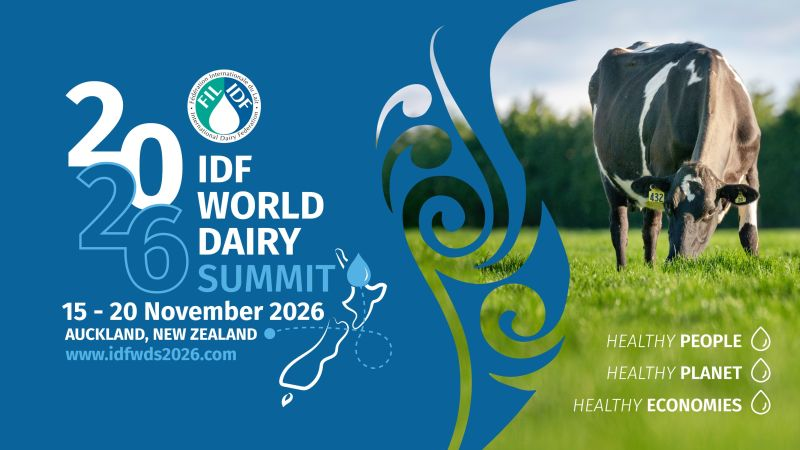
The global dairy community will gather in Auckland, New Zealand, from 15 to 20 November 2026 for the International Dairy Federation World Dairy Summit. Discover the programme and register at IDF World Dairy Summit 2026…