 THE GLOBAL WINDOW OF TURKISH FOOD AND AGRICULTURE The Global Window of Turkish Food and Agriculture Sector


Related Articles



August 2026…
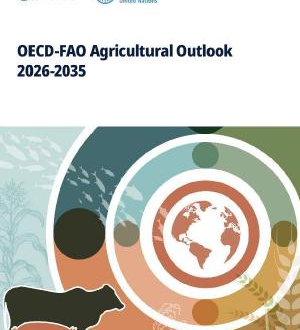
It would be worth taking a look at the 2026–2035 Agricultural Outlook Report, jointly published by the OECD and the FAO, a summary of which has also been published by Turkish Exporters’ Assembly (TİM).
The report provides a comprehensive analysis of production, consumption, trade and price projections for the next 10 years. When reviewing the reports covering the period 2010–2020, we observed findings indicating that the geographical focus of demand was on China. However, you can see in the report how this focus has shifted over the last few years. There is a great deal of detail. I would like to draw your attention to some key points.
1️⃣ Projected shifts in demand
✅China Reaching Saturation Point: Due to per capita calorie saturation and a shrinking population, China’s contribution to global demand growth has fallen to as low as 13 per cent.
✅New Growth Centres: 39 percent of consumption growth will originate from India and South-East Asia.
✅Regions with a Growing Food Deficit: The fastest growth in net food imports is expected in Sub-Saharan Africa (55 percent) and the MENA/NENA (Middle East–North Africa) region (34 per cent).
2️⃣ Production Model: A shift from an approach focused on expanding agricultural land to one centred on technology and productivity
✅73 percent of the global increase in crop production will come directly from higher yields per unit area, whilst 9 percent will stem from increased land-use intensity.
✅We must now grow not by ‘opening up more land’, but through seed breeding, drip/smart irrigation, precision farming and input optimisation.
3️⃣ Global Trade Saturation and the Logistics Reality
✅The share of global production involved in trade has risen from 16 per cent in 2000 to the 22–23 percent range and is set to remain at these levels; it is not expected to boost further
✅Unrestricted global liberalisation is giving way to regional supply corridors, cold chain security and bilateral trade agreements.
4️⃣ Geopolitical and Input Vulnerabilities: ‘Compound Shocks’
✅The simulation analysis in the report shows that potential disruptions in energy and fertiliser logistics (such as shocks in the Strait of Hormuz) could cause global real fertiliser prices to spike by up to 29 percent.
✅This volatility in input costs is directly reflected in crop yield losses and local food inflation.
💡 If we wish to gain a competitive edge in the global market, we need to interpret these macro trends correctly and take timely action…

By Dr. İsmail Aras,
Mevlana Development Agency