 THE GLOBAL WINDOW OF TURKISH FOOD AND AGRICULTURE The Global Window of Turkish Food and Agriculture Sector


Related Articles


Oğulcan Kemal Sagun, vice president of the Istanbul Fisheries and Animal Products Exporters’ Association (İSHİB), emphasized Türkiye’s strong position in global aquaculture: “We are the second-largest aquaculture producer and exporter in Europe after Norway and among the top 10 worldwide. A large share of the fish consumed in Europe comes from Türkiye.”

He noted that low domestic consumption has driven the industry to grow primarily through exports.
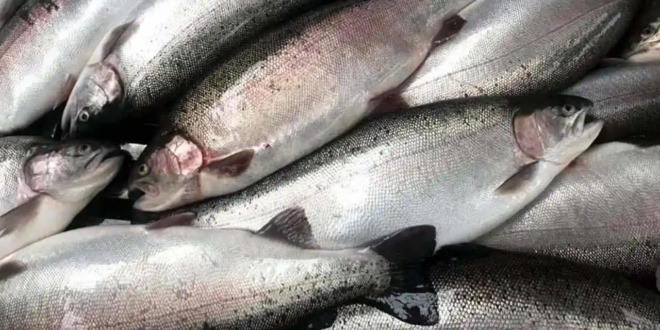
Sea bass generated the highest revenue at $121 million, followed by gilt-head bream at $92 million, Turkish salmon at $64 million, and tuna at $47 million. Compared to last year, exports rose 30 percent for sea bass, 21 percent for gilt-head bream, 22 percent for Turkish salmon, and 155 percent for tuna.
Russia was the leading market with $63 million in imports, followed by Italy ($45 million), the Netherlands ($37 million), Greece ($36 million) and the United Kingdom ($33 million). The sector, which reached $2.02 billion in exports in 2024 and set a record of $2.24 billion in 2025, now anticipates another milestone in 2026.
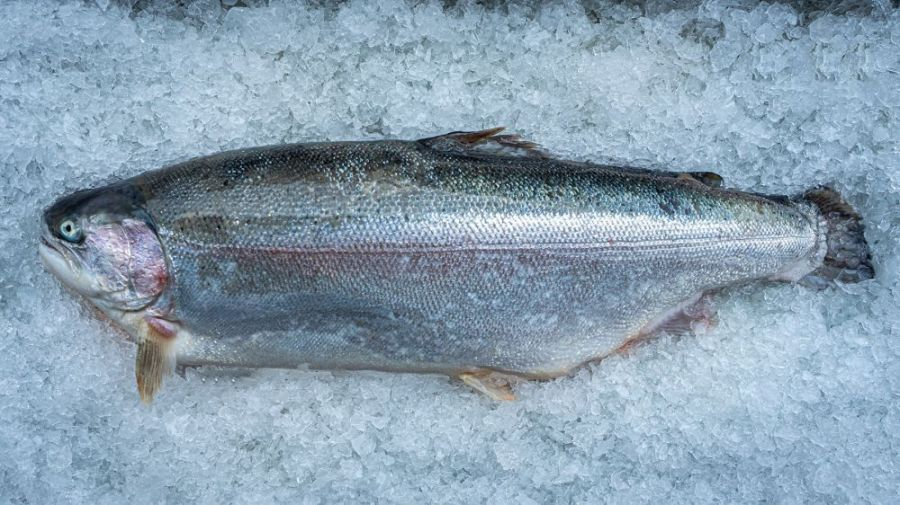
One of the most notable shifts has been in Turkish salmon exports. In 2019, Russia imported $31.3 million worth of trout, but by 2025, Turkish salmon had taken the lead with $378.7 million in exports. Similar trends were seen in Poland, where trout dominated in 2019 with $3.1 million, but Turkish salmon rose to $10.3 million in 2025. In Canada, Turkish salmon exports surged from just $25,380 in 2019 to $2.7 million in 2025, a 106-fold increase.
Explaining the success, Sagun said: “Turkish salmon is more natural compared to its rivals from Norway and Chile. We raise it in freshwater until it reaches 500 grams, then transfer it to the Black Sea.
“We use feed that meets world standards, and the fish’s quality is determined by its feed, environment, and processing. Turkish salmon meets all these criteria. We produce 100,000 tons annually, and there is still significant growth potential,” he added.