 THE GLOBAL WINDOW OF TURKISH FOOD AND AGRICULTURE The Global Window of Turkish Food and Agriculture Sector


Related Articles

August 2026…
The year 2025 marked a turning point where biotechnology was no longer confined to laboratories, but had also found its way into fields and onto dining tables. The climate crisis, food security concerns and the pressure for environmental sustainability have accelerated this transformation.
So, what concrete benefits did biotechnology bring to food and agriculture in 2025?
1. The first things that spring to mind are functional and resilient ‘super’ products
In this context, genetically improved varieties designed to enhance nutritional value and ‘smart’ seeds resistant to drought have taken centre stage. Some have found their place in the “medicinal food” category due to properties that may help reduce the risk of cancer.
• Purple tomatoes and potatoes: Enriched with anthocyanins and GABA. Tomatoes developed using CRISPR in Japan can have a positive effect on blood pressure, stress and sleep and also have higher levels of gamma-aminobutyric acid (GABA)
• Gluten-free wheat: Thanks to gene editing (CRISPR), the gluten proteins have been deactivated whilst preserving the wheat’s flavour and texture
• Crops resistant to salty and arid soils: Areas where seawater has infiltrated or which are considered infertile are being restored to productive use
• Nitrogen-fixing maize: It has been genetically engineered to be compatible with bacteria capable of fixing atmospheric nitrogen. The result? A 40 per cent reduction in the use of chemical fertilisers.
• Drought-tolerant HB4 wheat: It has become widespread on a commercial scale in Argentina
• Allergen-free peanuts: They are preparing to enter the US market
• In the United Kingdom: Europe’s first oilseed rape variety developed using gene-editing technology has been registered
2. Reduced Dependence on Chemical Fertilisers and Pesticides
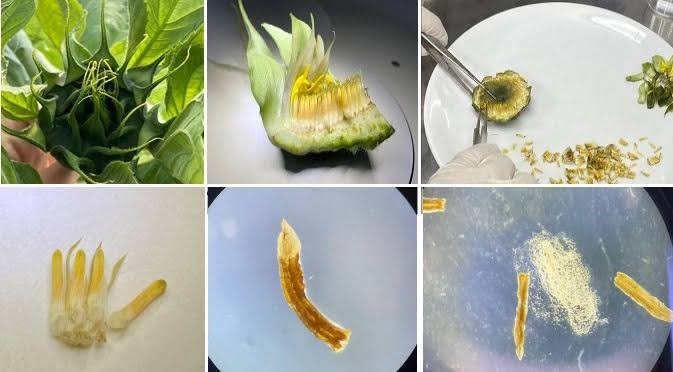
• Microbial fertilisers: By directly fixing atmospheric nitrogen to the plant’s roots, they have reduced the use of synthetic fertilisers
• RNA interference technology has provided environmentally friendly control methods that silence target genes without killing harmful insects.
3. Smart Plants: One of the most interesting innovations of 2025 was plants’ ability to signal their own condition
• Colour-Changing Plants: When nitrogen levels in the soil drop or a disease begins, the plants’ leaves change colour. Thanks to these ‘sensor plants’, issues are detected early using drones, reducing the use of pesticides
• A genetically engineered alga has been developed that can convert microplastics into a biomass that can be easily collected and removed, thereby filtering them out of wastewater.
4. Foods with Extended Shelf Life: Biotechnology has intervened in the plant’s decay process to prevent food waste
• Apples and mushrooms that do not brown.
• Strawberries that do not bruise or go soft: Fruits that retain their fresh colour for hours after being cut and are resistant to oxidation have revolutionised the packaged food sector
• Bananas that do not brown when cut and reduce food waste: Selected as ‘Invention of the Year’ by TIME magazine
As a result, food loss has been reduced by up to 30 percent.
5. Biotechnology in Livestock Farming
• Disease-resistant breeds
• Biotechnological feed additives that reduce methane emissions
• Cellular milk (cow-free milk proteins)
• Farmed fish: In particular, tuna and salmon that are free from heavy metals and harmless to the ocean ecosystem
• In 2019, freshwater carp in Argentina
• Fangri coral was bred in Japan
• In Russia, the first calf was cloned using CRISPR (eliminating an allergy to cow’s milk)
Gene-editing methods such as CRISPR, discovered in 2013, have been adopted by small-scale firms due to their low cost, thereby partially breaking the monopoly held by large corporations. However, in Türkiye, both gene transfer and gene editing are prohibited under the biosafety legislation. A national plant breeding strategy is not yet clearly defined. This issue must be discussed urgently amongst universities, the public sector and the private sector.
It appears that biotechnology will increasingly shape our food supply…

By Professor Dr. Nazimi Açıkgöz