 THE GLOBAL WINDOW OF TURKISH FOOD AND AGRICULTURE The Global Window of Turkish Food and Agriculture Sector


Related Articles
August 2026…
Agriculture is the oldest science in human history. However, today it is undergoing a transformation at a pace never seen before. Constraints such as a growing population, climate change, the shrinking of arable land and soil depletion will pose a major threat to the future of our agriculture. Globally, the agricultural sector faces overlapping pressures such as a declining labour force, intensifying climate extremes, the degradation of natural resources, rising food demand and geopolitical instability; these challenges threaten food security. Emerging technologies will be able to keep the world habitable in the coming decades, despite these adverse conditions.
Whilst the amount of agricultural land per capita has fallen from 4.3 hectares to 1.8 hectares over the past 60 years, the number of people fed per hectare has risen to 4.2. It is therefore inevitable that cutting-edge technologies must be deployed to maximise the use of every square metre of productive land. Thanks to new-generation sensors, artificial intelligence and satellite systems, agricultural production can continue:
• Soil moisture, temperature, pH and nutrient levels are continuously measured by sensors,
• Plant health is monitored in real time using satellite imagery,
• Artificial intelligence algorithms enable the early detection of diseases and pests, ensuring that irrigation, fertilisation and pesticide application are carried out at exactly the right time and in the right quantities. This reduces both production costs and the pressure on the environment. In short, agriculture is now managed on the basis of data.
Taking into account plants’ ability to adapt to the future, the development of crops resistant to drought, salinity or disease is linked to plant breeders’ work on developing new varieties. The development of new varieties—that is, plant breeding—used to take decades. Thanks to gene-editing techniques such as CRISPR and TALEN, which emerged in the 2010s, precise modifications can now be made to a plant’s natural genes. As a result, we are beginning to see varieties in the fields of the future that can grow with less water, are more nutritious and are better adapted to the environment. Gene editing is the process of silencing a gene or increasing or decreasing its effect—in other words, subjecting it to a micro-mutation—through molecular intervention at a specific location within the gene. This method is also referred to as the ‘New Breeding Technique’ (NBT). Gene editing is, in fact, an artificial mutation. As is well known, around five thousand new varieties have been registered worldwide through the use of mutations in plant breeding. Unlike with GMOs, there is no transfer of genes from another species involved here. In fact, the method was first used around 2013 and earned its discoverers the Nobel Prize. The development of a new chickpea variety in as little as four years has led to the rapid global spread of NBT.
It is estimated that by the 2050s, overall food requirements will be 70 percent higher, whilst demand for seafood will have doubled. On the other hand, whilst arable land continues to shrink, the climate crisis—particularly water scarcity and rising temperatures—is limiting agricultural production and, consequently, food supply. So, could lab-grown food be an option? When it comes to sustainable food production, it is a fact that land use, greenhouse gas emissions, the consumption of agricultural inputs and water constraints are key factors. When water scarcity is discussed, agriculture stands out as the sector that consumes the most water. Livestock farming is also a prominent sector in terms of water consumption. For this reason, scientists have set out to explore whether meat production could be carried out in laboratories. In 2013, Professor Mark Post (Maastricht University, the Netherlands) became the first scientist to prove that meat could be produced in laboratories and he immediately commercialised his discovery. He was followed by dozens of commercial firms. ‘Lab-grown meat’ was followed by products such as ‘milk’, ‘yoghurt’ and ‘fat’. In this context, new products designed to replace meat, milk and eggs—such as CELL-BASED or PLANT-BASED MEAT AND MILK, LAB-GROWN MEAT and MEAT-FREE MEAT—have entered the market. This form of production, carried out in a laboratory or factory environment using animal cells, is also known as CELLULAR AGRICULTURE.
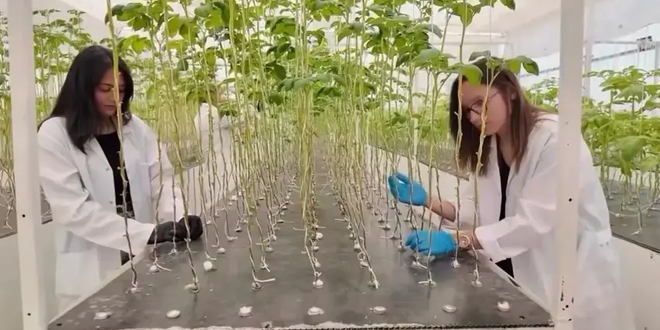
VERTICAL FARMING has emerged in response to challenges such as a growing urban population and limited agricultural land. This production model involves a system where plants are grown in layers, one on top of the other, in enclosed environments (usually in buildings or on shelves) in containers filled with nutrient solutions rather than soil. It is a fact that this method, also known as soilless farming, utilises the production area 10 times more efficiently than traditional farming. Thanks to climate control, production can take place year-round, whilst water usage can be reduced by up to 90 percent compared to traditional farming. Its implementation, particularly in city centres, is revolutionary in terms of ‘shortening the food supply chain’.
This system aims to use resources more efficiently and bring fresh food closer to the point of consumption by utilising technology (nutrient solutions, artificial intelligence, robotics).
The agriculture of the future will progress not only through technology but also through a philosophy of harmony with nature. The goal is now as much about ‘protecting the ecosystem’ as it is about ‘increasing yield’. Chemical fertilisers are being replaced by organic fertilisers. Beneficial microorganisms are being used to combat pests. Practices that enhance carbon sequestration in the soil (such as cover crops and reduced tillage) are becoming more widespread. In this way, agriculture is becoming a partner in the solution to climate change, rather than a victim of it.
No matter how much technology advances, people remain at the heart of agriculture. In this new era, farmers will be more than just producers; they will be data-literate, environmental stewards and ambassadors of innovation. A farming culture supported by science could also draw young people back to the countryside. The farmer of the future will control drones from a computer, but will also recognise the scent of the soil.
In the agriculture of the future, the soil will ‘speak’ through sensors, plants will be nourished by data and people, guided by science, will continue to produce enough to feed the growing population…

By Professor Dr. Nazimi Açıkgöz