 THE GLOBAL WINDOW OF TURKISH FOOD AND AGRICULTURE The Global Window of Turkish Food and Agriculture Sector


Related Articles

August 2026…
Press release…
Alhat Calls Again for DFIF Supports for Agricultural Exports…
Alhat Proposes DFIF Formula to Counter Double Pressure on Exports…
The US imposition of a 12.5 percent additional customs duty on Turkish olives and olive oil has put the Turkish sector at a disadvantage against competitors in the US, its largest export market.
The Turkish olive and olive oil sector, already struggling with exports due to the volatile exchange rate, has suffered a serious blow to its competitiveness with the US decision to impose different additional taxes depending on the country. According to the decision of the US Trade Representative, a 12.5 percent tax will be applied to olive oil sent from Türkiye to America, in addition to existing customs duties. The exemption of Tunisia, a major competitor of the country, from the additional tariff and the application of lower taxes to European Union products, has further hampered the presence of Turkish exporters in the US market.
“Export Supports Should Be Reinstated”
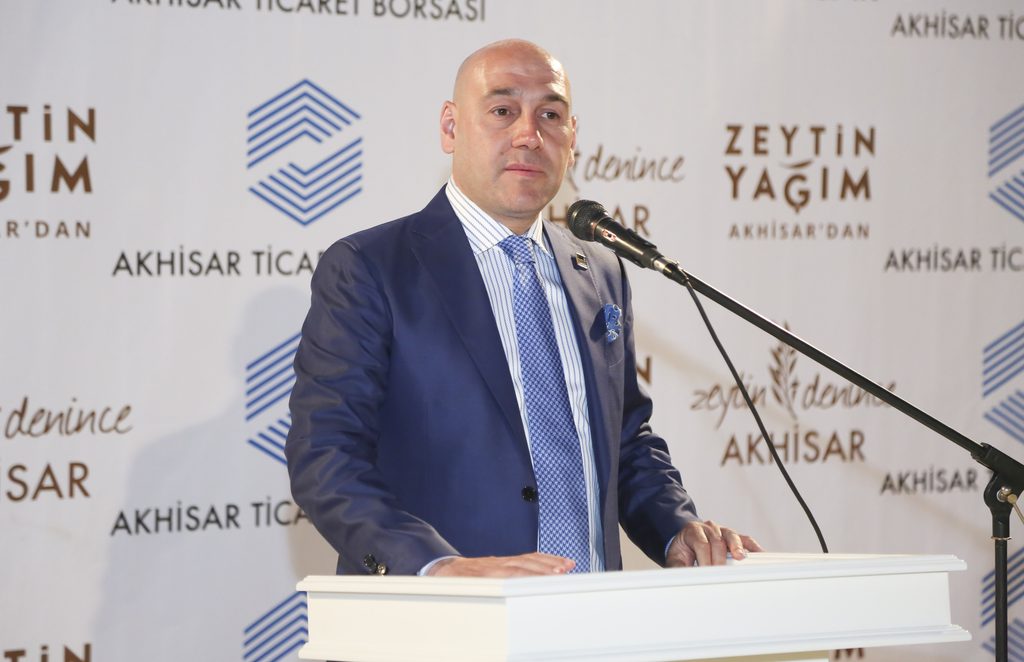
Alper Alhat, Chairman of the Board of Directors of the Akhisar Commodity Exchange, requested that the Support and Price Stabilization Fund (DFIF) subsidies, which were abolished three years ago due to pressure from the World Trade Organization (WTO), be reinstated because of the new conditions that have changed against Türkiye.
“In the past, the DFIF subsidies that Türkiye provided for agricultural product exports were abolished following the WTO’s warning that they ‘cause unfair competition.’ What does the WTO say about these different tariffs applied by the US to olive oil producing countries? We demand that the export supports we previously benefited from be reinstated to alleviate the difficulties created by US tariffs and exchange rates,” Alhat said.
Alhat, noting that trade has almost turned into a war between countries, continued:
“It’s no longer just about fighting with guns and cannons. Unfortunately, not only olives but the agricultural sector in general is suffering greatly from exchange rates and high interest rates and on top of that, the US’s additional tariff has hit our sector like a bomb. Agriculture and food are strategic. We need government support more than ever, especially to protect and develop our packaged markets. For several years, Spanish prices have been lower than we have had as Türkiye. Until now, we have tried to protect our markets by sacrificing our earnings and with the 3 percent foreign exchange conversion support provided to exporters. But this additional tariff is beyond what we can subsidize.”
The entire value chain is at risk…
Alhat pointed out that the loss of packaged export markets could affect not only exporters but also farmers, industrialists, the packaging sector, the logistics sector and others, impacting the entire value chain.
“Regaining lost market share is more costly”
Underlining the need to protect distribution networks and brand ties built over the years in the US and other markets, Alhat called for timely intervention to prevent temporary cost pressures from turning into permanent market losses.
Alhat also emphasized that in addition to continuing diplomatic initiatives with the US, the DFIF supports should be urgently reinstated so that the country can transform its high-quality production capacity into value-added exports.
DFIF supports increased gradually as the pack size decreased and when a Turkish brand was used. A subsidy of 650 dollars per tonne was paid for olive oil in 1-litre and smaller packs bearing a Turkish brand, whilst 260 dollars per tonne was paid for table olives…