 THE GLOBAL WINDOW OF TURKISH FOOD AND AGRICULTURE The Global Window of Turkish Food and Agriculture Sector



Related Articles


August 2026…
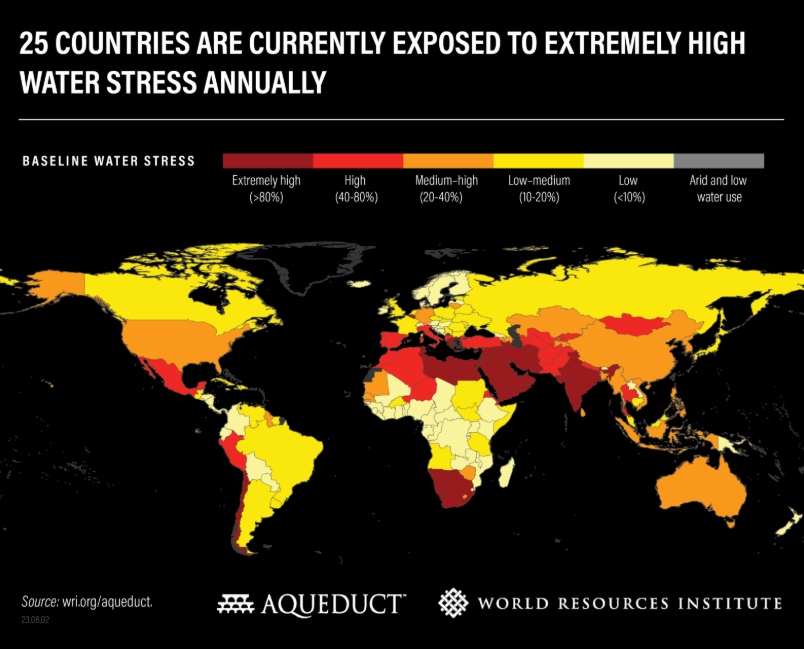
| Water is easy to take for granted — until there isn’t enough of it, or too much at once. This summer, both situations are playing out at once. Record droughts across Europe have slowed trade, hindered energy production and withered crops. Extreme rainfall brought flash floods across Asia, forcing hundreds of thousands from their homes. And these pressures are intensifying. WRI data shows how 25 countries, home to one-quarter of the global population, already face extremely high water stress each year. Conflict can deepen water crises, as seen in Iran, while a potential “super” El Niño could bring more droughts and floods later this year. At the same time, the AI-driven data centre boom is putting additional pressure on local water supplies. With water currently in the spotlight at the UN’s World Water Week, this special edition of the WRI Digest unpacks the many forces converging on the world’s water systems — and what it will take to build a more water-secure future. |
| The Scale of Water Risks… |
| Water risk is threatening the world’s most iconic places. Nearly three-quarters of UNESCO World Heritage sites — from the Taj Mahal to Victoria Falls — face severe water stress, drought or flooding. The clean energy transition faces its own water challenge. At least 16% of the world’s critical mineral mines and deposits are in highly water-stressed regions, risking supplies that local communities depend on. And water risks impact staple foods. WRI analysis shows that one-quarter of the world’s crops are grown in areas where water is highly stressed, unreliable, or both, including rice, wheat and corn — crops that provide more than half the world’s food calories. |
| Finding Solutions… |
| Restoring nature can prevent water-related disasters. Trees and healthy wetlands, for example, can absorb floodwater. Companies can play their part too by setting targets to reduce water use associated with their products. Across the world, local communities are tackling water crises in their own ways. In Ethiopia, solar-powered irrigation lets farmers harvest three to four times a year instead of once. Meanwhile, in South Africa, several cities are using nature-based solutions, such as removing water-thirsty invasive plants and replacing them with thousands of native species, to tackle both flooding and droughts. And one U.S. town is restoring upstream forests to protect its only water supply from wildfires. |
Source: www.wri.org