 THE GLOBAL WINDOW OF TURKISH FOOD AND AGRICULTURE The Global Window of Turkish Food and Agriculture Sector


Related Articles

July 2026…
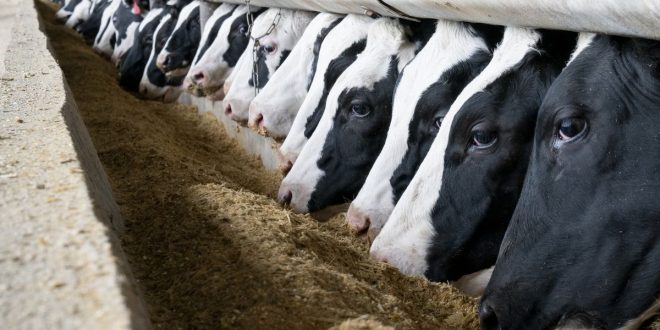
The European Commission published the EU Livestock Strategy on July 7, 2026. The strategy views the EU livestock sector as a strategic sector not only in terms of environmental obligations, but also in terms of food security, rural development, competitiveness, strategic autonomy and resilience to crises.
While recent years have seen environmental, climate, and animal welfare-focused regulations in EU-level agricultural and livestock policies, the new strategy demonstrates a shift towards a more balanced approach. The European Commission states that reversing the weakening structure of the livestock sector requires more than just new obligations; investment, financing, technology use, productivity increases, digitalization and innovative solutions must also be central to the policy framework.
The document states that the livestock sector accounts for approximately 40 percent of the EU’s agricultural added value, generates an annual turnover of 400 billion euros, provides employment for approximately 7 million people in the value chain and is based on 4 million businesses. In this respect, the Commission considers livestock farming as one of the key areas that need to be protected and transformed in terms of Europe’s rural economy, food security and global competitiveness.
The strategy states that the sector faces challenges such as declining livestock numbers, low profitability, high input costs, an aging farmer population, animal diseases, climate pressure and access to investment financing. The Commission also emphasizes that sustainability and animal welfare transformation in the livestock sector necessitate significant investment and that the sector is struggling to meet these investments on its own under current conditions.
In this context, the new strategy points to a policy orientation that should be closely monitored by Turkish agricultural machinery manufacturers. The Commission prioritizes the use of financing, incentives and technology to reduce the carbon footprint in livestock farming, increase productivity, improve animal welfare and strengthen resilience to crises. This approach; modern barn and shelter systems, ventilation and climate control equipment, animal welfare-focused production systems, cage-free production transition technologies, manure and nutrient management, biogas and digestate applications, precision feeding, feed efficiency, sensors, robotic systems, digital monitoring, early warning systems and precision livestock solutions can create new opportunities.
The Commission’s action plan also includes topics such as financing livestock investments, risk management, combating animal diseases, measuring greenhouse gas emissions at the farm level, simplifying nitrate regulations, strengthening slaughterhouse infrastructure in rural areas and making EU-origin animal products more visible through quality/labeling.
This strategy is not directly a machinery support program or call for proposals. However, it is a policy document that our sector should closely monitor, as it shows which technology areas will be prominent in the EU’s post-2027 Common Agricultural Policy agenda regarding investment financing, sustainability, digitalization and livestock modernization…