 THE GLOBAL WINDOW OF TURKISH FOOD AND AGRICULTURE The Global Window of Turkish Food and Agriculture Sector



Related Articles



Press release…
Fevzi Çondur, Chair of the Turkish Cotton Council (UPK) stated that he would like to draw attention to the devastating effects of climate change on agriculture.
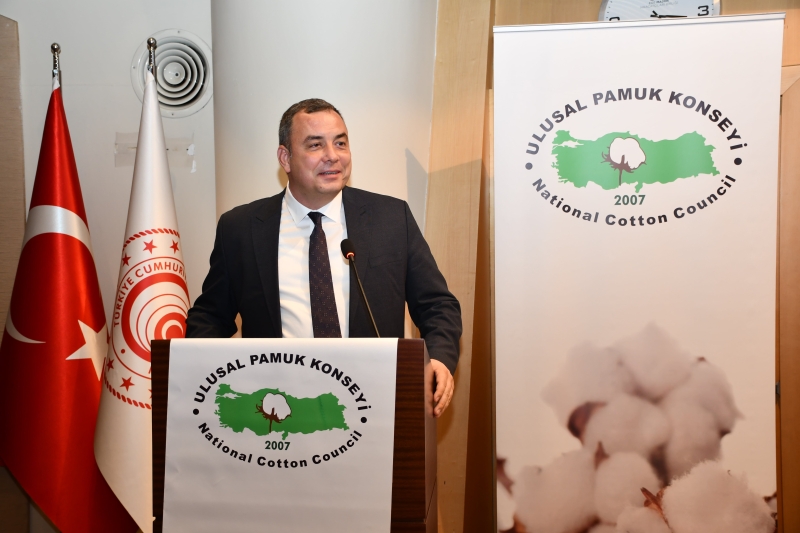
Çondur also emphasised that cotton producers are facing serious yield losses, particularly due to increasingly severe droughts in recent years.
Underlining that rainfall patterns have changed in many cotton-producing regions of Türkiye, groundwater levels have decreased and irrigation opportunities are becoming more limited every day, Çondur said, “Climate change and the depletion of water resources are among the greatest threats to cotton production. Climate-induced water shortages make production planning impossible. As irrigation costs rise, producers who cannot access water are abandoning cotton cultivation. This is not only an agricultural problem, but also an issue of rural development and economic stability.”
‘Water Management for Sustainable Cotton Production Can No Longer Be Postponed’
Pointing out that cotton production is one of the areas most affected by climate change, Çondur explained, “In this context, it is necessary to demonstrate a common will to promote pressurised irrigation methods, implement new irrigation projects, and manage water efficiently. Cotton varieties that are resistant to climatic conditions and use water more efficiently should be developed and made available to producers. R&D work in this area must be supported. Water management is now an urgent issue for sustainable cotton production. If comprehensive strategies that adapt to climate conditions are not developed, the losses incurred will not be limited to producers; the country’s economy will also be seriously affected.”

High Input Costs Increase the Risk of Abandoning Production…
Referring to the increase in input costs faced by cotton producers in addition to climate change, Çondur noted, “Input costs are challenging the sustainability of producers, and the current differential payment subsidies are insufficient to encourage cotton production.”
“At this point, it is crucial to adapt support measures to current conditions, adjust payment schedules to align with producers’ financial needs, and implement a planned production model. The climate of uncertainty increases the risk of completely abandoning production, especially among small-scale farmers,” Çondur added.
“Furthermore, access to finance is a decisive factor in the production process. Barriers to accessing finance must be removed, and producers must be provided with access to more comprehensive financing at appropriate interest rates. This is of great importance for the sustainability of agricultural production,” he concluded…